1. History & Context: The Birth of a Discipline
A brief origin story to frame why Peace Studies emerged and why it still matters.
Origin Story: Post-WWII and the Cold War
The mid-20th century introduced existential risks—nuclear escalation, global ideological confrontation, and mass civilian vulnerability. Scholars and practitioners responded by building a field dedicated to understanding peace as rigorously as war.
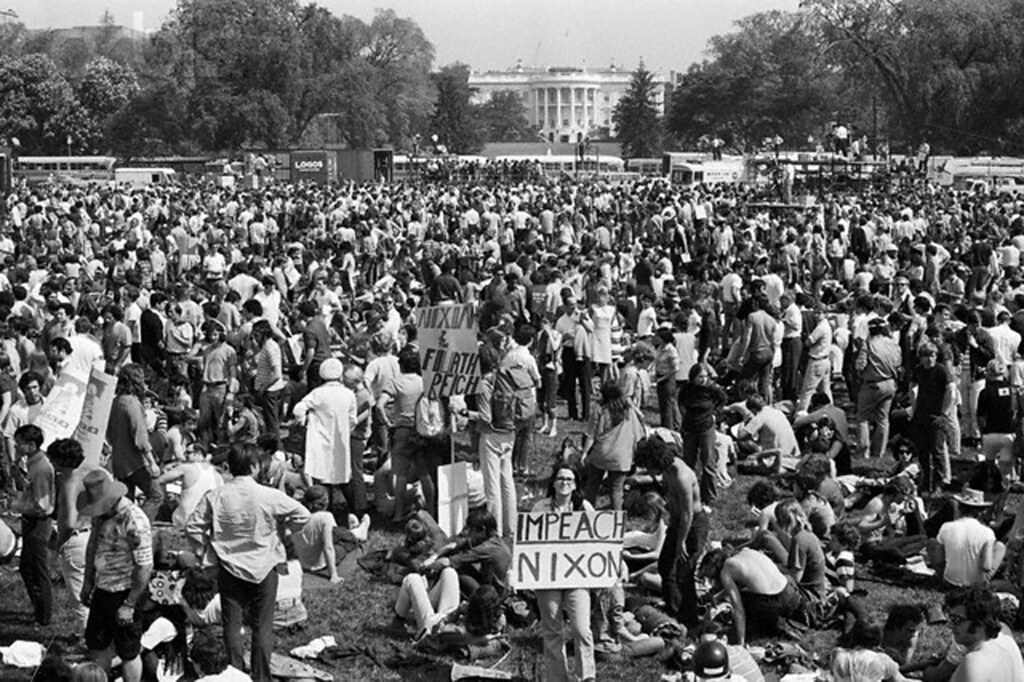
"Peace research was born at the intersection of peace activism and the emergence of modern social science. Although war and peace have always been key issues in the field of international relations (Kant, 1795/1991; Knutsen, 1997), it was only in the 1950s that calls arose for the systematic investigation of the conditions of peace as a special academic field or even a separate discipline. We are unable to identify the first person to use the term 'peace research', but Johan Galtung – the founder of PRIO and of this journal – was certainly an early user in a pacifist manifesto published in Norwegian (Galtung, 1959). At the time, backed by a double master's degree from the University of Oslo in statistics and sociology, Galtung was an instructor in sociology at Columbia University. At the same time he was active in the Norwegian section of War Resisters' International, which also published his book. One of the chapters called for the establishment of peace research institutes, in Norway and internationally. PRIO was founded in 1959 as the 'Section for Conflict and Peace Research' of the Institute for Social Research."
From Gleditsch et al. in Peace research – Just the study of war?. Read more here.
Irenology Defined: Eirene (Peace) + Logos (Study)
Irenology treats peace as a multifactorial phenomenon: threats to peace, conditions for harmony, and the systemic interactions among individuals, communities, and institutions.
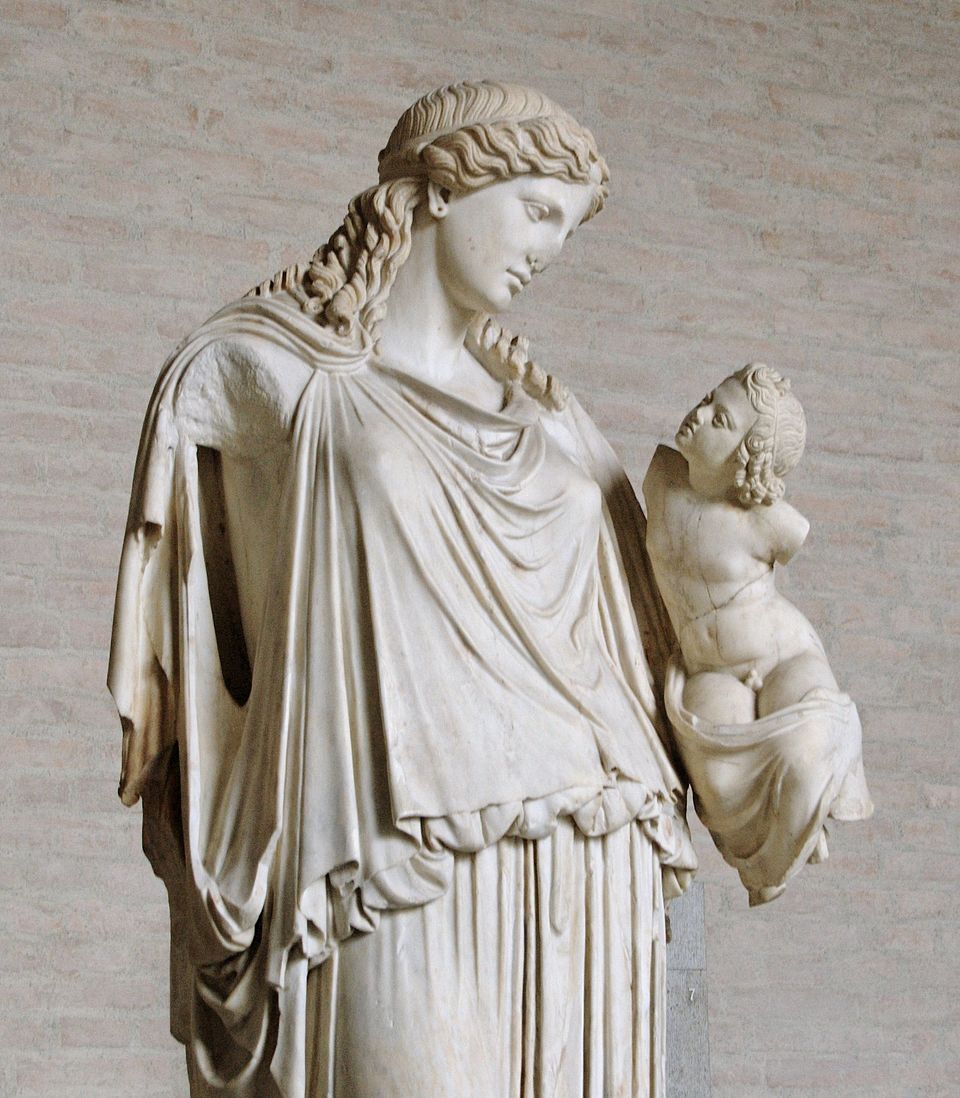
"Whereas there have been different approaches to studying peace, contemporary Western peace studies (or irenology, from the Greek "Irene," the goddess of peace) focuses on the analysis, prevention, de-escalation, and solution of conflicts by peaceful or nonviolent means, thereby seeking satisfactory outcomes for all parties involved, rather than winners and losers. This is in contrast to traditional international and so-called security studies, which focus on factors leading to victory or defeat in conflicts waged principally by violent means and to the increased or decreased "security" of one—but typically not all—of the parties involved. Because peace studies investigates the reasons for and outcomes of large- and small-scale conflicts, as well as the preconditions for peace, the discipline is also known as peace and conflict studies (PCS). Its focus allows one to examine not only war but also the various forms of violence, including structural violence—notably social oppression, discrimination, exploitation, and marginalization—while also addressing the effects of political, cultural, and physical violence. The rigorous analysis of peace and conflict lends itself, as well, to the assessment and promotion of various peacemaking strategies, in response to growing popular alarm about the many perils facing today's world."
From David P. Barash and Charles P. Webel in Peace and Conflict Studies (5th Edition): Barash, D. P., & Webel, C. P. (2021). Peace and Conflict Studies (5th ed.). SAGE Publications.
The UPEACE Mandate: A university for the science of peace
UPEACE was established to cultivate scholarship and practice oriented to preventing violence, fostering justice, and developing the skills to construct sustainable peace.

On 5 December, 1980, the General Assembly of the United Nations adopted Resolution 35/55 which sets out in its annex the International Agreement for the Establishment of the University for Peace. The Charter of the University is an integral part of that agreement. Forty-one (41) countries have become Signatory States to the UPEACE Charter.
The University is established with a clear determination to provide humanity with an international institution of higher education for peace and with the aim of promoting among all human beings the spirit of understanding, tolerance and peaceful coexistence, to stimulate cooperation among peoples, and to help lessen obstacles and threats to world peace and progress, in accordance with Article 2 of its Charter.
Additional Resources & Materials
Video lectures and materials to expand on concepts and ideas.
2. Anatomy of Violence
Violence has visible and hidden layers; peace must address all.
Violence: A spiral repeating itself
Violence can be visible and invisible, but it's our duty to understand it and to address it. Violence always brings more violence.
"Violence is any avoidable insult to basic human needs, and, more generally, to sentient life of any kind, defined as that which is capable of suffering pain and enjoy well-being. Violence lowers the real level of needs satisfaction below what is potentially possible."
Direct Violence: The visible act
Hits, insults, war—events we can point to and count.
Structural Violence: The hidden system
Poverty, legal discrimination, lack of access—patterned harm built into institutions and norms.
Cultural Violence: The justification
Prejudices, "that's just how it is," religious or nationalist rationales that normalize harm.
Additional Resources & Materials
Video lectures and materials coming soon. Placeholder for embedded videos and downloadable materials.
Video 2 placeholder
Quick Check
Key Realization: Peace requires dismantling structural and cultural violence, not only stopping direct violence.
3. What is Peace? (The Kaleidoscope)
Multiple lenses, one thread: interdependence and constructive management of difference.
Diverse Perspectives: Philosophical, Systemic, Communal
- Philosophical/Religious — inner harmony; ideas like Shalom/Salaam.
- Systemic — balanced systems where parts function sustainably.
- Communal — the quality of relationships (e.g., Lederach’s “Enredos”).
Patterns: Finding the common thread
Across perspectives, interdependence and constructive engagement with difference recur as conditions for durable peace.
Negative vs. Positive Peace: The core distinction
Negative Peace reduces visible harm; Positive Peace builds systems that prevent harm.
Additional Resources & Materials
Video lectures and materials coming soon. Placeholder for embedded videos and downloadable materials.
Video 1 placeholder
Video 2 placeholder
4. The Epistemological Challenge: Can we study "Nothing"?
If peace is defined by what doesn't happen, how do we observe it?
Measuring the Invisible: Beyond "absence of war"
Metrics built only on violent events undercount peace. Non-events are hard to observe; we shift toward indicators of resilience, inclusion, and equitable systems.
The Shift: From counting bodies to Positive Peace
Positive Peace measures the presence of conditions that prevent violence: fair institutions, rights protections, access to basic needs, and trusted conflict resolution mechanisms.
The Descartes Trap: Vocabulary shapes perception
We tend to see what we can describe. Expanding our language—beyond war terms—allows us to perceive peace dynamics and opportunities.
Additional Resources & Materials
Video lectures and materials coming soon. Placeholder for embedded videos and downloadable materials.
Video 1 placeholder
Video 2 placeholder
Quick Check
5. Conflict as Opportunity
We already have a separate demo elsewhere. Here, we focus on the takeaways.
The Logic of Trust: Communication changes incentives
Game theory illustrates how communication and credible commitments can unlock cooperation, avoiding traps where "rational" choices yield harmful outcomes.
Conflict vs. Violence: Conflict is natural
Conflict is permanent and can drive growth when managed without violence. The aim is transformation—shifting relationships and systems to handle difference constructively.
Additional Resources & Materials
Links to the Prisoner’s Dilemma demo and trust-building exercises will go here. Placeholder for embedded videos and downloadable materials.
Video 1 placeholder
Video 2 placeholder